
Internal Bends
Sheet Metal Bend Types
Internal Bends
Short overview video
Bending is a key process in sheet metal fabrication used to shape flat metal sheets into custom components and enclosures. At Protocase, sheet metal is bent with a press brake or folder in order to form custom electronic enclosures and parts.
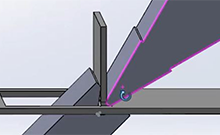
An internal bend is a bend that is placed on a particular area of a part where material surrounds the bend, rather than a typical bend, which is placed at the outermost edge of a part.
An inset bend is very similar to an internal bend, except an inset bend is inset a small amount from the part edge, instead of being completely inside the part profile.
Internal Bending Process
To create an internal bend, we section the upper and bottom tooling of the bending equipment. This allows us to align the tooling with the internal edge flange. With the tooling sectioned, it only bends the part of the material it contacts.
Sequence of Internal Bends
Internal Bend Samples
Materials for Internal Bends
Internal bends can be created on many types of sheet metal, including aluminum, cold rolled steel, galvanneal and stainless steel.
Internal Bend Design Constraints and Guidelines
To create an internal bend, the cutout for the flange must be large enough to accommodate half of the bottom tooling. The bend width also needs to be smaller than the smallest available die.
If you have questions, our Engineering & Design Services team is available to review your design and assess the feasibility of your internal bend placement.
Finishes
Parts with internal bends can be treated with any of our finishes, so long as the part meets the minimum and maximum dimensions for the particular finish you choose.